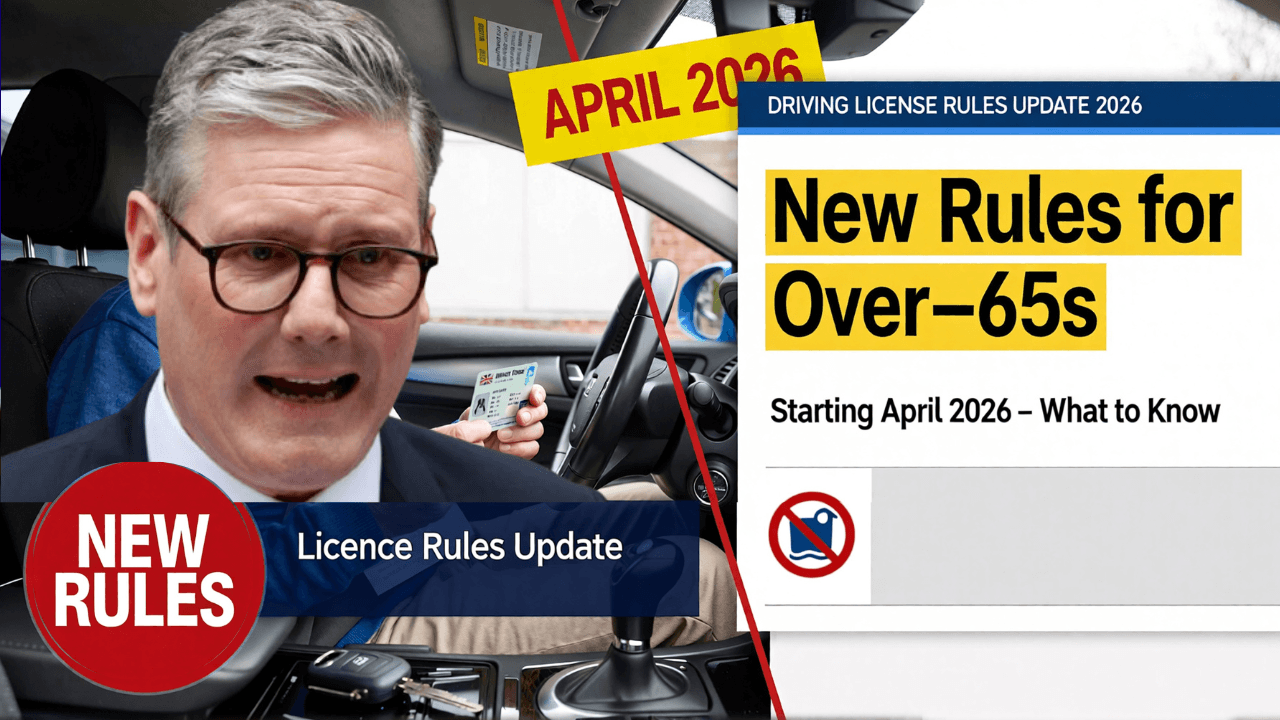
For many people across the United Kingdom, driving is far more than a convenience. It represents independence, flexibility and the ability to stay connected with everyday life. Whether it’s doing the weekly shop, visiting family or attending medical appointments, having a driving licence plays a vital role—especially as we get older.
So when news emerges about new driving licence rules for over‑65s starting in April 2026, it’s no surprise that it raises questions. Some drivers worry about losing their licence, while others are unsure whether new tests or restrictions will apply.
The reality, however, is more balanced than many headlines suggest. In this article, we’ll explain everything clearly, so you can understand what’s changing, what’s staying the same and how it might affect you.
Understanding the current UK driving licence system
In the UK, driving licences are managed by the Driver and Vehicle Licensing Agency.
At present:
There is no automatic driving test at age 65
Drivers can continue as long as they are medically fit
Licence renewal is required at age 70
After 70, renewal happens every three years
During renewal, drivers confirm that they are fit to drive, particularly in terms of eyesight and health.
What is changing from April 2026
The new rules linked to April 2026 are not about introducing strict new tests for everyone. Instead, they focus on enhancing safety and improving how fitness to drive is assessed.
Expected changes include:
Stronger emphasis on medical self-assessment
Improved verification of health conditions
Better communication between drivers and authorities
Encouragement of voluntary driving checks
These updates are designed to support safe driving rather than restrict it.
No mandatory retest at 65
One of the biggest concerns is whether drivers over 65 will need to retake a driving test.
At present, there is no confirmed rule requiring a mandatory retest purely based on age.
This means:
You do not automatically lose your licence at 65
You are not required to pass a new driving test
Age alone does not determine your ability to drive
Instead, the focus remains on your individual fitness to drive.
The growing focus on medical fitness
A key part of the updated approach is medical fitness.
The Driver and Vehicle Licensing Agency requires drivers to report certain conditions that could affect safe driving.
These may include:
Vision problems
Neurological conditions
Heart-related illnesses
Mobility limitations
If a condition affects your ability to drive safely, your licence may be reviewed.
Why these changes are being introduced
There are several reasons behind these updates.
These include:
An ageing population in the UK
More people driving later in life
Increased focus on road safety
Advances in medical understanding
The goal is to ensure that all drivers—regardless of age—are safe and confident on the road.
What this means for drivers over 65
For most drivers over 65, the changes will have little immediate impact.
You can still:
Drive as normal
Renew your licence when required
Maintain your independence
The updates are more about awareness and safety than restriction.
Licence renewal remains at 70
It’s important to remember that licence renewal rules remain unchanged.
You must:
Renew your licence at age 70
Renew every three years after that
Confirm your medical fitness during renewal
This system continues to form the foundation of driving regulations for older drivers.
Could your licence be at risk
Your licence is not at risk simply because of your age.
However, it could be affected if:
You fail to meet eyesight standards
You have a medical condition that impacts driving
You do not renew your licence on time
You provide incorrect information
These rules apply to all drivers, not just those over 65.
Voluntary driving assessments
One of the key recommendations under the updated approach is voluntary assessment.
Drivers may choose to:
Take a refresher driving course
Have a professional driving assessment
Improve confidence behind the wheel
These are optional and designed to support, not penalise.
How eyesight plays a role
Eyesight is one of the most important factors in safe driving.
Drivers must be able to:
Read a number plate from a specific distance
Maintain adequate vision for road conditions
Regular eye tests are strongly recommended, particularly as you get older.
The importance of staying confident
Confidence plays a major role in safe driving.
If you feel unsure:
A refresher lesson can help
A professional assessment can provide reassurance
Support is available without pressure
Staying confident helps you remain safe and independent.
Common misunderstandings about the new rules
There are several misconceptions circulating.
Some people believe:
All over‑65s must retake a driving test
Licences will be automatically removed
New rules apply immediately to everyone
In reality, none of these claims are accurate.
What families should know
Family members often play an important role in supporting older drivers.
It can help to:
Encourage regular health checks
Have open conversations about driving
Offer support if confidence declines
This helps balance safety with independence.
What you should do now
If you are over 65, there is no need to worry—but staying informed is important.
You can:
Check your licence expiry date
Keep your medical information up to date
Schedule regular eye tests
Stay updated with official guidance
These steps can help you stay prepared.
Avoiding scams and misinformation
Whenever rule changes are discussed, scams can increase.
Be cautious of:
Messages asking for payment for licence updates
Calls requesting personal details
Fake websites offering driving services
Always rely on official sources for accurate information.
The future of driving in the UK
Driving rules are likely to evolve over time.
Future developments may include:
Safer vehicles with advanced technology
Better monitoring systems
More personalised support for drivers
The aim is to keep roads safe while maintaining independence.
How this affects everyday life
For most drivers, daily life will not change significantly.
You can continue to:
Drive your usual routes
Carry out daily activities
Maintain your lifestyle
Any updates will be gradual and clearly communicated.
Key points to remember
There is no mandatory driving test at 65
Licence renewal still starts at 70
Medical fitness is the main requirement
Changes focus on safety, not restriction
Most drivers will not be affected immediately
Final thoughts
The introduction of new UK driving licence rules for over‑65s from April 2026 reflects a growing focus on road safety and responsible driving. While the headlines may sound concerning, the reality is far more reassuring.
There is no blanket rule forcing older drivers off the road or requiring immediate retesting. Instead, the system continues to prioritise individual ability, health and confidence.
By staying informed, taking care of your health and understanding the rules, you can continue to enjoy the freedom and independence that driving provides—well into later life.