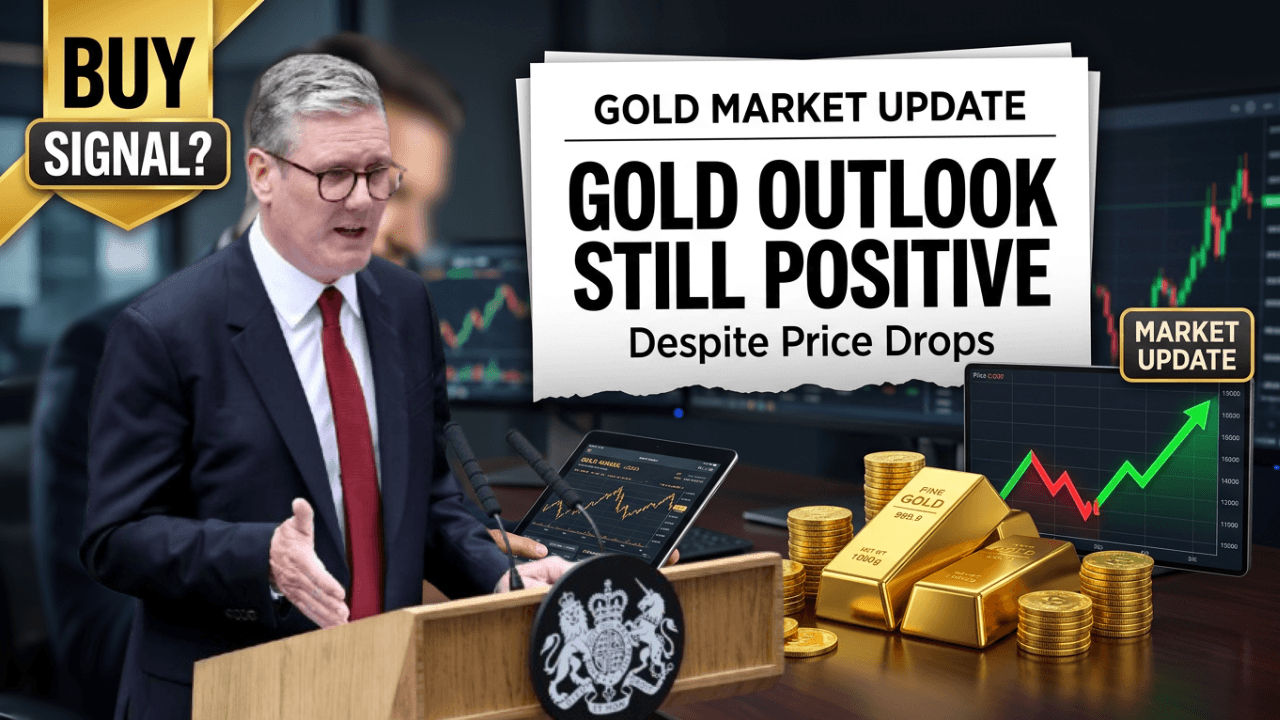
Gold has long been seen as a safe haven in times of uncertainty. Whether during economic downturns, inflation spikes or geopolitical tensions, investors often turn to gold as a reliable store of value. So when prices dip, it naturally raises questions—should investors be worried, or is this simply part of a larger cycle?
Recently, gold prices have experienced short-term declines, leading to mixed reactions across financial markets. However, many analysts remain optimistic, suggesting that the overall outlook for gold is still positive.
In this article, we’ll explore what’s behind the recent price drops, why experts remain confident, and what this means for investors in the UK.
Why gold prices have recently dropped
Short-term price movements in gold are not unusual. In fact, gold is known for experiencing periods of fluctuation even within long-term upward trends.
Several factors have contributed to recent price declines.
Stronger currency performance
When major currencies strengthen, gold can become more expensive for international buyers, reducing demand.
Interest rate expectations
Higher interest rates can make other investments, such as bonds or savings accounts, more attractive compared to gold, which does not generate income.
Profit-taking by investors
After periods of strong price growth, some investors choose to sell and lock in profits, leading to temporary price dips.
These factors are typically short-term and do not necessarily reflect long-term weakness.
Why analysts remain optimistic
Despite these declines, many financial experts continue to view gold positively.
Their confidence is based on several underlying factors that support long-term demand.
Inflation remains a key driver
Inflation continues to be one of the biggest reasons investors turn to gold.
When the cost of living rises:
The value of cash savings can decrease
Gold often retains its purchasing power
For UK households facing ongoing price pressures, gold remains an attractive hedge against inflation.
Economic uncertainty supports demand
Global economic conditions remain uncertain.
Factors such as:
Slowing growth in some regions
Geopolitical tensions
Market volatility
All contribute to increased interest in safe-haven assets like gold.
In uncertain times, investors often prioritise stability over high returns.
Central banks continue buying gold
One of the strongest signals supporting gold’s outlook is continued demand from central banks.
Many countries are:
Increasing their gold reserves
Diversifying away from other assets
Strengthening financial stability
This consistent demand helps support prices over the long term.
Currency fluctuations and gold
Gold is closely linked to currency movements.
When currencies weaken:
Gold often becomes more attractive
Investors seek protection against currency risk
For UK investors, fluctuations in the pound can influence how gold performs in local terms.
The role of gold in a balanced portfolio
Financial experts often recommend including gold as part of a diversified investment strategy.
Gold can:
Reduce overall portfolio risk
Provide stability during market downturns
Act as a hedge against inflation
Even a small allocation can make a difference over time.
Short-term volatility vs long-term trends
It’s important to distinguish between short-term price movements and long-term trends.
Gold may experience:
Daily or weekly price fluctuations
Temporary declines due to market sentiment
However, over longer periods, it has historically shown resilience.
This is why analysts often focus on long-term fundamentals rather than short-term changes.
What this means for UK investors
For investors in the UK, the current situation presents both challenges and opportunities.
Price drops may:
Create buying opportunities
Allow investors to enter the market at lower levels
At the same time, it’s important to approach investment decisions carefully and consider your financial goals.
Is now a good time to invest in gold
There is no single answer to this question, as it depends on individual circumstances.
However, many analysts suggest that:
Buying during dips can be beneficial
Long-term investment strategies tend to be more effective
Rather than trying to time the market perfectly, a steady and informed approach is often recommended.
Physical gold vs other options
There are several ways to invest in gold.
Physical gold
Includes coins and bars, offering direct ownership.
Gold ETFs
Allow you to invest without holding physical assets.
Gold mining stocks
Provide exposure to companies involved in gold production.
Each option has its own advantages and risks.
Risks to consider
While gold is often seen as a safe investment, it is not without risks.
These include:
Price volatility
No regular income or dividends
Market sentiment changes
Understanding these risks is essential before investing.
The impact of interest rates
Interest rates play a significant role in gold prices.
When rates rise:
Other investments may offer better returns
Gold may become less attractive in the short term
However, if rates stabilise or fall, gold can regain momentum.
How global events influence gold
Gold prices are heavily influenced by global events.
These can include:
Political tensions
Economic policy changes
Financial market instability
Because of this, gold often reacts quickly to news and developments.
Why long-term demand remains strong
Despite short-term fluctuations, the long-term demand for gold remains strong.
This is due to:
Its role as a store of value
Limited supply
Global recognition as a safe asset
These factors continue to support its position in financial markets.
What analysts are saying
Many analysts agree on one key point:
Short-term dips do not change the overall outlook.
Instead, they often see:
Temporary corrections as part of normal market behaviour
Opportunities for strategic investment
This perspective helps explain why confidence in gold remains high.
How to approach gold investing
If you are considering investing in gold, a balanced approach is important.
You should:
Assess your financial goals
Diversify your investments
Avoid making decisions based on short-term trends
A long-term perspective can help reduce risk.
Common misconceptions
There are several myths about gold investing.
Some people believe:
Gold always rises in value
Price drops mean long-term weakness
It is risk-free
In reality:
Gold prices can fluctuate
Short-term declines are normal
All investments carry some level of risk
The importance of staying informed
Financial markets are constantly changing.
Staying informed helps you:
Understand market movements
Make better decisions
Avoid reacting to misleading headlines
Reliable information is key to successful investing.
Looking ahead
The outlook for gold will continue to depend on a range of factors.
These include:
Inflation trends
Interest rate decisions
Global economic conditions
While short-term movements may vary, the broader picture remains positive according to many experts.
Key points to remember
Gold prices can fall in the short term
Long-term outlook remains positive
Inflation and uncertainty support demand
Central banks continue to buy gold
A balanced investment approach is essential
Final thoughts
The recent dip in gold prices may raise concerns at first glance, but it is important to view it in context. Markets move in cycles, and short-term fluctuations are a natural part of investing.
For many analysts, the fundamentals supporting gold remain strong. Inflation, economic uncertainty and continued demand all contribute to a positive long-term outlook.
For UK investors, the key is not to react to every price movement, but to understand the bigger picture. By staying informed and taking a measured approach, you can make decisions that align with your financial goals—and potentially benefit from opportunities that arise along the way.