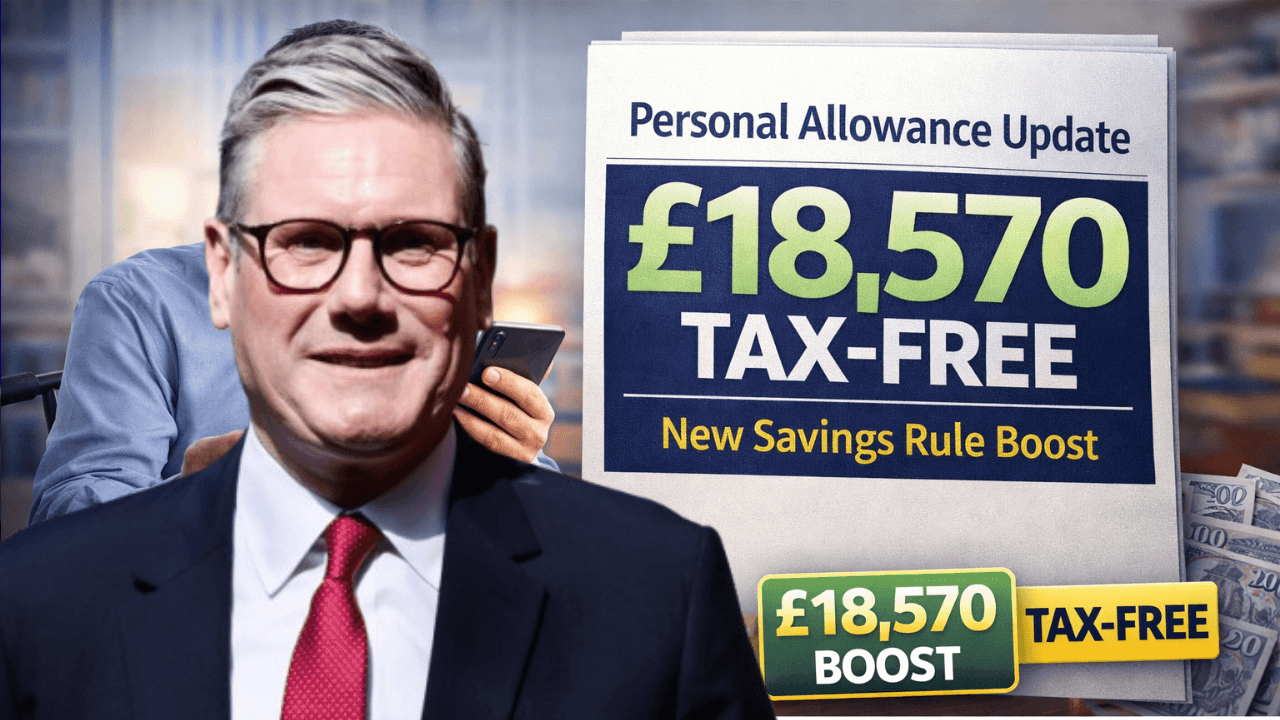
For many people across the United Kingdom, understanding how much of your income is tax-free can make a real difference to your financial planning. Whether you’re earning a salary, living off savings or managing a mix of income sources, tax rules directly affect how much money you get to keep.
That’s why recent discussions around a £18,570 tax‑free allowance under new savings-related rules have attracted attention. It sounds like a major increase—but what does it actually mean? Is it available to everyone? And how does it work in practice?
In this guide, we’ll break everything down in a simple and realistic way so you can understand how these rules may apply to you.
What the tax-free allowance means
In the UK, the tax-free allowance is the amount of income you can earn before paying income tax.
This is managed by HM Revenue and Customs and applies to most individuals.
Traditionally, this includes:
Your Personal Allowance
Certain savings allowances
Other tax-free thresholds depending on your situation
The idea is straightforward—you don’t pay tax until your income goes above a certain level.
Where the £18,570 figure comes from
The £18,570 figure is not a standard Personal Allowance on its own. Instead, it typically represents a combined tax-free threshold under specific conditions.
This may include:
The standard Personal Allowance
The Personal Savings Allowance
Starting rate for savings
When combined, these can increase the total amount of income you receive without paying tax.
Understanding the Personal Allowance
The Personal Allowance is the core tax-free amount.
For most people:
You can earn a set amount each year tax-free
Income above this is taxed at standard rates
This applies to:
Wages
Pensions
Some benefits and other income
It forms the foundation of the UK tax system.
What is the Personal Savings Allowance
The Personal Savings Allowance allows you to earn interest on savings without paying tax.
Depending on your tax band:
Basic rate taxpayers can earn up to a certain amount tax-free
Higher rate taxpayers get a smaller allowance
Additional rate taxpayers may not receive it
This applies to interest from:
Savings accounts
Bank deposits
Some investment products
The starting rate for savings explained
There is also a special rule called the “starting rate for savings.”
This can allow up to an additional amount of savings income to be tax-free if your other income is low.
In simple terms:
If your earnings are below a certain level
You may benefit from a higher tax-free savings threshold
This is where the combined £18,570 figure can come into play.
Who benefits the most from this rule
The people who benefit most are those with:
Low earnings
Modest pensions
Savings generating interest
For example:
Retirees with savings income
Part-time workers with additional savings
Individuals with mixed income sources
For these groups, the combined allowances can significantly reduce tax.
How this affects pensioners
Pensioners are among the biggest beneficiaries of these rules.
If your total income is structured correctly:
You may pay little or no tax
Savings interest can remain tax-free
Your overall income becomes more efficient
This is particularly helpful for those relying on fixed incomes.
What it means for savers
For savers, the new rule highlights the importance of understanding how interest is taxed.
You may be able to:
Earn more interest without paying tax
Optimise how your money is stored
Reduce your overall tax burden
This makes saving more attractive.
Is this a new rule or existing system
It’s important to understand that this is not entirely new.
The £18,570 figure usually reflects:
Existing allowances working together
Clarification of how rules apply
Increased awareness rather than a brand-new policy
So while it may feel like a new benefit, it is often about how the system is used.
How to check if you qualify
To see whether this applies to you, you need to look at your total income.
This includes:
Employment income
Pension income
Savings interest
If your earnings fall within certain ranges, you may benefit from combined allowances.
How much tax you could save
The exact savings depend on your situation.
You might:
Pay no tax on savings interest
Reduce your overall tax bill
Keep more of your income
Even small savings can add up over time.
What to do if you are unsure
If you’re not sure how this affects you, there are simple steps you can take.
You can:
Check your tax code
Review your income sources
Contact HM Revenue and Customs
This will give you a clearer picture.
The importance of financial planning
Understanding tax rules is a key part of financial planning.
You should consider:
How your income is structured
Where your savings are held
How much tax you are paying
Small adjustments can lead to better outcomes.
Common misunderstandings
There are several misconceptions about the £18,570 figure.
Some people believe:
Everyone gets this allowance automatically
It replaces the Personal Allowance
It applies to all types of income
In reality:
It depends on your income mix
It mainly applies to savings-related income
It is not a universal threshold
How this fits into wider tax changes
The UK tax system is constantly evolving.
Changes may include:
Adjustments to allowances
Updates to tax bands
New financial support measures
Understanding these changes helps you stay ahead.
What this means for everyday life
For many people, this rule can provide:
Extra financial flexibility
Better use of savings
Reduced tax pressure
While not life-changing, it can still be valuable.
Avoiding misinformation
Tax headlines can sometimes be misleading.
Be cautious of:
Claims that everyone gets higher allowances
Exaggerated figures
Confusing explanations
Always look at how rules apply to your situation.
What you should do now
If you want to make the most of these rules, take a few simple steps.
Review your savings
Check your income levels
Understand your tax position
Seek advice if needed
This helps you maximise your benefits.
Looking ahead
Tax rules around savings are likely to continue evolving.
We may see:
Further adjustments to allowances
Changes in savings incentives
New financial planning opportunities
The goal is to encourage saving while maintaining fairness.
Key points to remember
£18,570 is a combined tax-free figure, not a single allowance
It mainly benefits people with savings income
Not everyone qualifies automatically
Planning your finances is important
Understanding the rules helps you save more
Final thoughts
The idea of a £18,570 tax-free allowance under new savings rules can sound like a major boost—and for some people, it genuinely is. However, the key is understanding how the different parts of the system work together.
By taking the time to review your income, savings and tax position, you can make informed decisions and potentially keep more of what you earn. In today’s financial climate, even small advantages can make a meaningful difference.