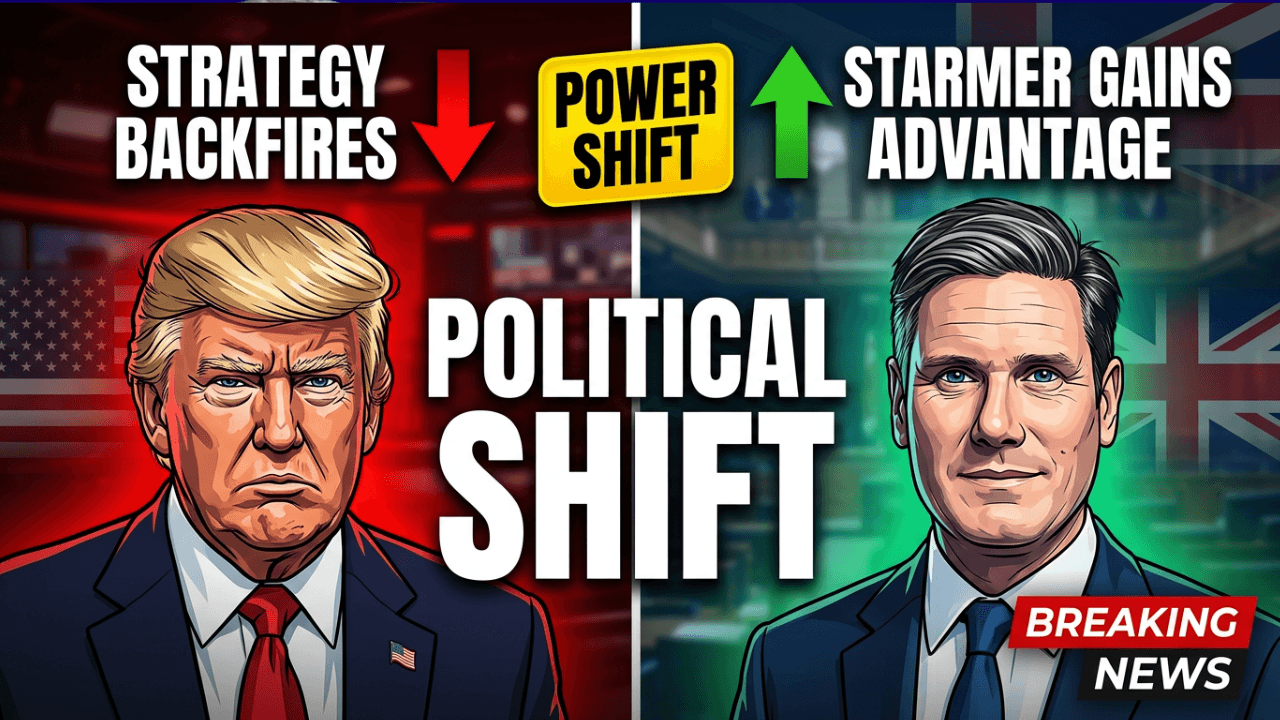
In today’s fast-moving political landscape, strategies that once appeared strong can quickly unravel under pressure. This has been particularly evident in recent developments involving Donald Trump and Keir Starmer. What initially seemed like a calculated political move on the global stage has, in many ways, produced the opposite effect—strengthening Starmer’s position both domestically and internationally.
For UK audiences, the story is not just about American politics. It highlights how global political narratives can influence perceptions at home, shaping leadership credibility, public trust and future policy direction.
Understanding the political backdrop
To fully grasp how this situation unfolded, it’s important to look at the broader context. Donald Trump has long been known for his direct and often unconventional political style. His strategies frequently rely on bold messaging, strong rhetoric and a focus on national interests.
On the other hand, Keir Starmer has positioned himself as a more measured and pragmatic leader. His approach tends to emphasise stability, diplomacy and rebuilding institutional trust—qualities that resonate strongly with many UK voters, especially after years of political uncertainty.
The contrast between these two leadership styles has created a dynamic where actions on one side can significantly impact perceptions on the other.
What Trump’s strategy aimed to achieve
Trump’s recent political moves appeared to be designed to reinforce his image as a dominant global figure. His approach focused on:
Reasserting influence in international discussions
Appealing to domestic supporters through strong messaging
Challenging existing alliances and norms
Such strategies often aim to project strength and decisiveness. However, they also carry risks—particularly when they intersect with international partners like the UK.
Where the strategy began to falter
While bold political tactics can energise a core base, they can also alienate broader audiences. In this case, several factors contributed to the strategy backfiring:
Perceived unpredictability in decision-making
Strained diplomatic tone
Mixed reactions from international allies
For UK observers, these elements created a sense of contrast. Instead of reinforcing Trump’s position globally, they opened space for alternative leadership styles to gain attention.
How Starmer capitalised on the moment
Keir Starmer’s response has been notably calm and strategic. Rather than directly confronting or criticising, he has focused on presenting a steady and reliable alternative.
This has included:
Emphasising strong UK-US relations based on mutual respect
Highlighting the importance of stable leadership
Reinforcing his image as a pragmatic decision-maker
By avoiding reactive politics, Starmer has positioned himself as a figure of consistency—something many voters value highly.
The importance of tone in modern politics
One of the key lessons from this situation is the growing importance of tone. In an age of constant media coverage and rapid information sharing, how a message is delivered can be just as important as the message itself.
Trump’s assertive tone, while effective with certain audiences, can sometimes be perceived as divisive. In contrast, Starmer’s measured communication style often appeals to those seeking clarity and reassurance.
This difference has played a significant role in shaping public perception.
UK public reaction and perception
For UK audiences, the comparison between the two leaders has become increasingly relevant. Many people are less focused on the specifics of US politics and more interested in how global events reflect on domestic leadership.
In this context, Starmer’s approach has been seen by some as:
More stable and predictable
Better aligned with UK diplomatic traditions
Focused on long-term outcomes rather than short-term impact
This perception has contributed to a gradual strengthening of his political position.
Media influence and narrative shaping
Media coverage has also played a crucial role in how this situation has unfolded. Headlines often emphasise contrast, and in this case, the narrative has largely highlighted:
Trump’s strategy facing challenges
Starmer emerging as a steady alternative
Such framing can amplify public perception, making the contrast between leaders more pronounced.
The role of international relations
The UK’s relationship with the United States remains one of its most important international partnerships. Any shift in tone or strategy from US leadership naturally draws attention in the UK.
Starmer’s emphasis on cooperation and diplomacy aligns closely with traditional UK foreign policy values. This has allowed him to present himself as someone capable of maintaining strong international ties, regardless of political changes abroad.
Why this matters for UK politics
While the story originates in US politics, its implications for the UK are significant.
It highlights:
The importance of leadership style
The impact of global perception on domestic politics
The value of consistency in uncertain times
For voters, these factors can influence how they evaluate current and future leadership.
The impact on leadership credibility
Credibility is one of the most valuable assets in politics. Once established, it can strengthen a leader’s position significantly.
In this situation:
Trump’s strategy has raised questions among some observers
Starmer’s approach has reinforced his image as a dependable leader
This shift in perception can have lasting effects, particularly as political narratives continue to evolve.
Strategic patience versus bold moves
Another key takeaway is the contrast between strategic patience and bold action.
Trump’s approach often relies on immediate impact and strong statements. Starmer, by contrast, has shown a willingness to take a more patient route, focusing on long-term credibility rather than short-term attention.
In the current climate, this difference appears to be working in Starmer’s favour.
What this means for future political dynamics
Looking ahead, this situation may influence how political strategies are developed on both sides of the Atlantic.
Leaders may:
Reconsider the balance between assertiveness and diplomacy
Focus more on international perception
Adapt communication styles to broader audiences
These shifts could shape political discourse for years to come.
Common misconceptions
It’s important to address some common misunderstandings.
Some may assume:
One leader’s setback automatically guarantees another’s success
International events have limited impact on domestic politics
In reality:
Political advantage is often temporary
Public opinion can shift quickly
Multiple factors influence leadership standing
Understanding this helps provide a more balanced perspective.
The importance of adaptability
Politics is constantly changing, and adaptability is key to long-term success.
Leaders who can:
Respond calmly to challenges
Adjust their strategies
Maintain public trust
are more likely to succeed over time.
Starmer’s recent positioning suggests a strong awareness of this principle.
How voters interpret leadership
Ultimately, voters play the most important role in shaping political outcomes.
They often look for:
Stability and reliability
Clear communication
Practical solutions
In this context, the contrast between different leadership styles becomes highly significant.
A shifting narrative
What began as a strategic move by Donald Trump has gradually evolved into a narrative that benefits Keir Starmer.
This shift highlights how quickly political momentum can change—and how important it is to manage both actions and perception carefully.
Key points to remember
Trump’s strategy aimed to project strength but faced mixed reactions
Starmer’s calm and measured response strengthened his position
Public perception in the UK has favoured stability and consistency
Media narratives have amplified the contrast between the two leaders
Political advantage can shift quickly depending on context
Final thoughts
The situation involving Donald Trump and Keir Starmer serves as a powerful reminder of how interconnected modern politics has become. A strategy designed for one audience can have unintended consequences elsewhere, shaping perceptions in unexpected ways.
For UK audiences, the story is less about choosing sides and more about understanding what effective leadership looks like in today’s world. In a time of uncertainty, qualities like stability, clarity and consistency are increasingly valued.
As political dynamics continue to evolve, one thing remains clear: success is not just about making bold moves—it’s about making the right ones at the right time, and ensuring they resonate with the people who matter most.