For many people across the United Kingdom, Individual Savings Accounts (ISAs) are one of the most trusted and widely used ways to save money. Offering tax-free interest and investment growth, ISAs have long been seen as a safe and efficient way to build financial security.
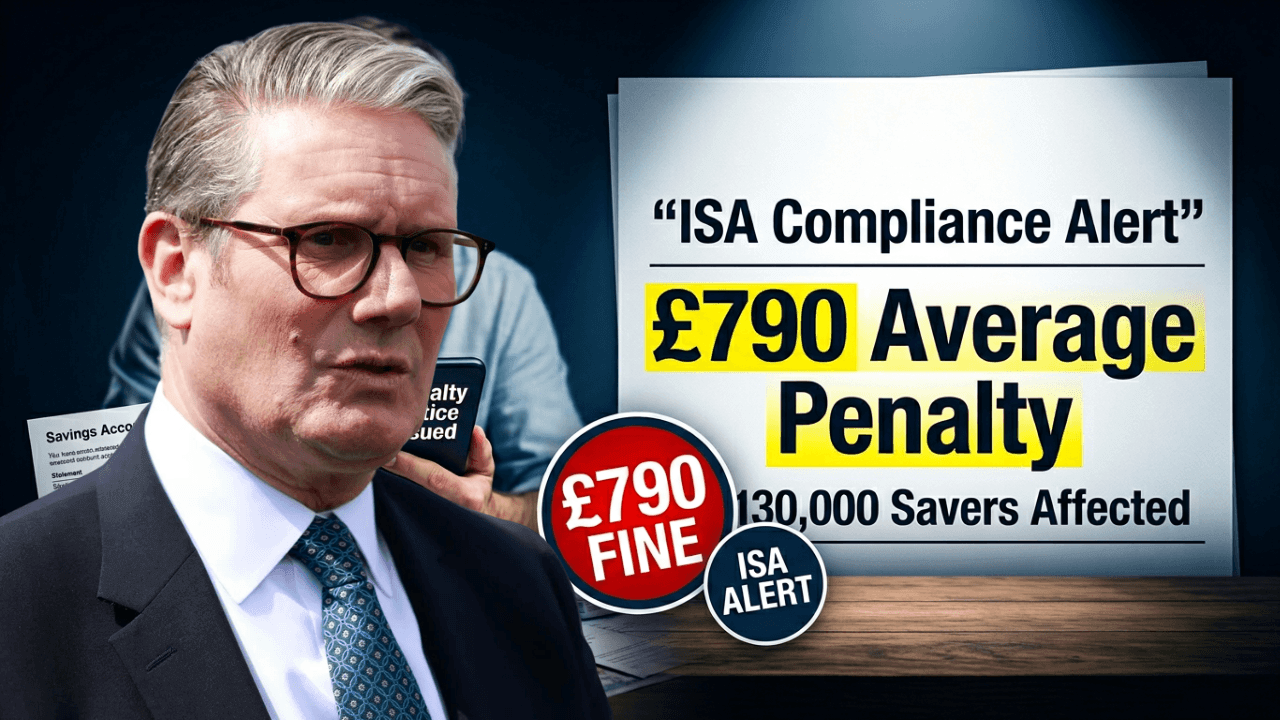
However, recent headlines suggesting that 130,000 ISA savers have been hit with an average £790 penalty have raised concerns. For savers who believed their accounts were fully protected from tax issues, this news can feel both confusing and worrying.
In this article, we’ll explain exactly what’s going on, why these penalties are happening, and how you can avoid being affected.
What ISAs are and why they matter
An ISA is a tax-efficient savings or investment account available to UK residents. The main benefit is simple:
You do not pay tax on interest, dividends or capital gains within the ISA.
ISAs are regulated by HM Revenue and Customs, which sets rules on how much you can contribute and how accounts should be used.
Each tax year, there is an ISA allowance—this is the maximum amount you can deposit across all your ISAs without losing tax benefits.
Why penalties are being issued
The key point to understand is this:
The penalties are not random—they are linked to rule breaches.
HMRC has increased its monitoring of ISA accounts to ensure compliance. As part of this, it has identified cases where rules have not been followed correctly.
Common reasons include:
Exceeding the annual ISA allowance
Opening multiple ISAs of the same type incorrectly
Incorrect transfers between providers
Administrative or reporting errors
When these rules are broken, the tax-free status of some funds can be affected, leading to penalties.
What the £790 average penalty means
The £790 figure is an average, not a fixed amount.
This means:
Some people may have paid less
Others may have faced higher penalties
The actual amount depends on:
How much the rules were breached
How long the issue remained uncorrected
The amount of tax owed
So while the headline figure sounds alarming, individual cases can vary significantly.
How exceeding the ISA allowance happens
One of the most common issues is exceeding the annual allowance.
For example:
If the ISA allowance is £20,000
And you accidentally deposit £22,000 across multiple accounts
The extra £2,000 may lose its tax-free status and be subject to tax.
This often happens when:
People hold multiple ISAs with different providers
They lose track of total contributions
Transfers are not properly recorded
The issue with multiple ISAs
Another common mistake involves opening more than one ISA of the same type in a single tax year.
While you can hold multiple ISAs overall, rules apply to how they are opened and funded.
Mistakes can occur when:
Opening accounts with different banks
Switching providers mid-year
Misunderstanding transfer rules
Even small errors can trigger compliance checks.
ISA transfers and where people go wrong
Transfers between ISA providers must follow specific procedures.
If not done correctly:
Funds may lose their tax-free status
Records may become inconsistent
HMRC may flag the account for review
For example, withdrawing money and redepositing it instead of using an official transfer process can create issues.
Why HMRC is increasing enforcement
HMRC has been stepping up its compliance efforts in recent years.
This is part of a broader strategy to:
Ensure fairness in the tax system
Prevent misuse of tax-free allowances
Improve reporting accuracy
With digital systems becoming more advanced, it is now easier to identify discrepancies across accounts.
Who is most at risk
The people most likely to be affected are not necessarily those trying to break rules.
Often, it includes:
Regular savers with multiple accounts
People actively managing investments
Those unaware of specific ISA rules
In many cases, penalties result from misunderstanding rather than intentional misuse.
What happens if you break ISA rules
If HMRC identifies an issue, several things can happen.
These may include:
Removing tax-free status from certain funds
Charging tax on interest or gains
Applying penalties where appropriate
In most cases, HMRC will notify you and explain what has happened.
How to check if you’re affected
If you’re concerned about your ISA, there are a few simple steps you can take.
You should:
Review your total contributions for the current tax year
Check how many ISAs you’ve opened
Look at your transaction history
This helps you identify any potential issues early.
What to do if you find a mistake
If you realise you’ve made an error, it’s best to act quickly.
You can:
Contact your ISA provider
Speak to a financial adviser
Inform HM Revenue and Customs if necessary
In many cases, early action can help minimise penalties.
The importance of accurate record-keeping
Keeping track of your ISA activity is essential.
You should maintain records of:
Contributions
Transfers
Account openings
This makes it easier to stay within the rules and avoid problems.
Common misconceptions about ISAs
There are several myths that can lead to mistakes.
Some people believe:
ISAs are completely tax-free in all situations
There are no limits on how much you can deposit
Transfers can be done informally
In reality:
Rules must be followed carefully
Limits apply each tax year
Transfers must follow official procedures
How to stay within ISA rules
Staying compliant is not complicated, but it does require attention.
You should:
Keep track of your annual allowance
Use official transfer processes
Avoid opening multiple similar ISAs in one year
Check your accounts regularly
These simple steps can help you avoid unnecessary issues.
Why ISAs are still valuable
Despite these penalties, ISAs remain one of the best savings tools available in the UK.
They offer:
Tax-free growth
Flexibility in saving and investing
Long-term financial benefits
The key is using them correctly.
How this affects everyday savers
For most people, these changes will not have a direct impact.
If you follow the rules:
Your ISA remains fully tax-free
No penalties apply
Your savings continue to grow efficiently
The crackdown mainly affects those with errors or misunderstandings.
Avoiding panic from headlines
Headlines about penalties can sound alarming, but they often lack context.
It’s important to remember:
Not all savers are affected
Penalties are linked to specific issues
Most problems are avoidable
Understanding the details helps reduce unnecessary worry.
The role of financial awareness
Financial awareness plays a big role in avoiding issues like this.
By understanding basic rules, you can:
Protect your savings
Avoid unexpected costs
Make better financial decisions
Even a small amount of knowledge can make a big difference.
Looking ahead
As financial systems continue to evolve, compliance is likely to become even more important.
Future developments may include:
More automated checks
Stricter reporting requirements
Greater transparency for savers
Staying informed will help you adapt.
Key points to remember
ISA penalties are linked to rule breaches
£790 is an average, not a fixed amount
Common issues include exceeding limits and incorrect transfers
Most mistakes are unintentional
Following the rules keeps your savings protected
Final thoughts
The news that 130,000 ISA savers have faced penalties averaging £790 highlights the importance of understanding how tax-free savings accounts actually work. While ISAs remain a powerful financial tool, they are not entirely risk-free if rules are not followed.
For most savers, there is no need for concern—just awareness. By keeping track of your contributions, understanding the rules and acting quickly if something seems wrong, you can continue to benefit from everything ISAs have to offer.
In the end, it’s not about avoiding ISAs—it’s about using them wisely.