For millions of pensioners across the United Kingdom, the State Pension is more than just a payment—it’s a financial foundation. It helps cover essential costs like food, heating and housing, especially for those who rely heavily on it as their main source of income.
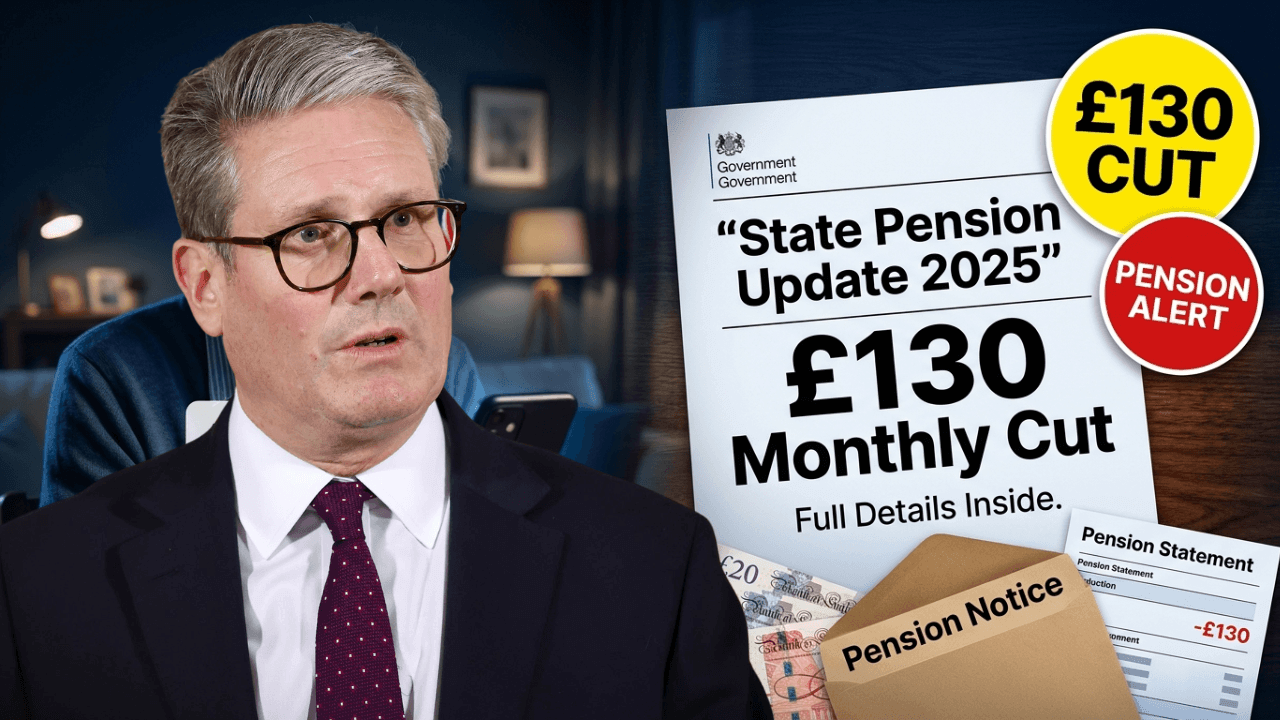
So when headlines suggest that the UK State Pension could be reduced by £130 per month in 2025, it naturally raises alarm. For many, this sounds like a major cut that could significantly impact daily life.
But what’s the real story behind this figure? Is the government actually reducing pensions, or is there more context that needs to be understood?
In this article, we’ll break everything down clearly so you know exactly what’s happening, what the £130 figure means, and whether you need to be concerned.
What the £130 pension “cut” actually refers to
The idea of a £130 monthly reduction can sound like a direct cut to pension payments, but that’s not quite accurate.
There is no confirmed policy where the government is reducing State Pension payments by £130 per month for all pensioners.
Instead, this figure is usually linked to:
Changes in tax thresholds
Differences between expected and actual increases
Impact of frozen allowances
Individual financial situations
These factors can sometimes create the impression of a “cut,” even when payments are not being directly reduced.
Understanding how the State Pension works
The State Pension is managed by the Department for Work and Pensions and is based on your National Insurance record.
There are two main types:
The new State Pension (for those reaching retirement age after 2016)
The basic State Pension (for older claimants)
The amount you receive depends on:
Your qualifying years of contributions
Your individual entitlement
Importantly, payments are reviewed each year and are generally increased rather than reduced.
The role of the Triple Lock
One of the key features of the UK pension system is the “triple lock.”
This guarantees that the State Pension increases each year by the highest of:
Inflation
Average earnings growth
2.5%
This system is designed to protect pensioners from rising living costs.
Because of the triple lock, a direct cut in payments is highly unlikely under normal circumstances.
Why some people feel worse off
Even without a direct cut, some pensioners may feel like they are losing money.
This can happen due to:
Rising living costs
Frozen tax thresholds
Increased taxation on pension income
Loss of additional benefits
These factors can reduce real spending power, even if the pension itself increases.
The impact of frozen Personal Allowance
The Personal Allowance—the amount you can earn before paying tax—is currently frozen at £12,570.
This is set by HM Revenue and Customs.
As pension payments increase over time:
More people may exceed this threshold
More pension income becomes taxable
This can result in higher tax bills, which may feel like a reduction in income.
How the £130 figure may arise
The £130 monthly figure often comes from combined effects rather than a single change.
For example:
Increased tax on pension income
Loss of certain benefits
Higher living costs
When added together, these factors may reduce disposable income by around this amount for some individuals.
However, this is not a universal or guaranteed figure.
Will all pensioners be affected
No, and this is a crucial point.
The £130 impact:
Does not apply to everyone
Varies based on income and circumstances
May not apply at all for many pensioners
Those with lower incomes or who remain below the tax threshold may see little or no impact.
What happens in 2025
In 2025, pension payments are expected to:
Increase in line with the triple lock
Be adjusted for inflation or earnings
Continue as part of normal annual updates
There is no confirmed policy that reduces the base State Pension amount.
How tax can affect your pension
Even though the State Pension is paid without tax deducted at source, it is still taxable.
This means:
It is included in your total income
Tax may be collected through other income sources
Adjustments may be made via tax codes
If your total income rises, your tax liability may increase.
The importance of checking your tax position
To understand your personal situation, it’s important to review your finances.
You should check:
Your total annual income
Your tax code
Any letters from HM Revenue and Customs
This will help you see whether any deductions apply to you.
Cost of living pressures
Another reason the £130 figure feels realistic to some people is the rising cost of living.
Expenses such as:
Energy bills
Food prices
Transport costs
have increased significantly in recent years.
Even with pension increases, these rising costs can reduce overall financial comfort.
Common misunderstandings
There are several myths around this topic.
Some people believe:
The government is cutting pensions directly
Everyone will lose £130 per month
The change is automatic and universal
In reality:
There is no blanket cut
Impacts vary widely
Most pensioners will not see a direct reduction
Why headlines can be misleading
Financial headlines often focus on large numbers to attract attention.
The £130 figure sounds dramatic, but it does not reflect a single policy change.
Understanding the full context helps avoid unnecessary worry.
What you should do now
There is no need for immediate action, but it’s wise to stay informed.
You can:
Review your pension income
Check your tax details
Monitor official updates
This will help you stay in control of your finances.
Support available for pensioners
If you’re concerned about your income, there may be additional support available.
This can include:
Pension Credit
Housing support
Energy assistance schemes
These can help offset rising costs.
How families can help
Family members can support pensioners by:
Explaining financial updates
Helping review income and expenses
Providing reassurance
This can make a big difference in reducing stress.
Looking ahead
The UK pension system continues to evolve in response to economic conditions.
Future changes may include:
Adjustments to tax thresholds
Updates to benefit systems
Continued pension increases
Staying informed will help you adapt.
Key points to remember
There is no confirmed £130 pension cut
The State Pension is expected to increase, not decrease
Tax and living costs may affect disposable income
Impacts vary by individual
Checking your finances is the best approach
Final thoughts
The headline about a £130 monthly reduction in the UK State Pension for 2025 may sound alarming, but it does not reflect a direct cut in payments. Instead, it highlights the complex interaction between pensions, tax and the cost of living.
For most pensioners, the system continues to provide stable and increasing support. The key is understanding how these different factors affect your personal situation.
With the right information, you can move forward with confidence—knowing that while headlines may sound dramatic, the reality is often far more balanced and manageable.